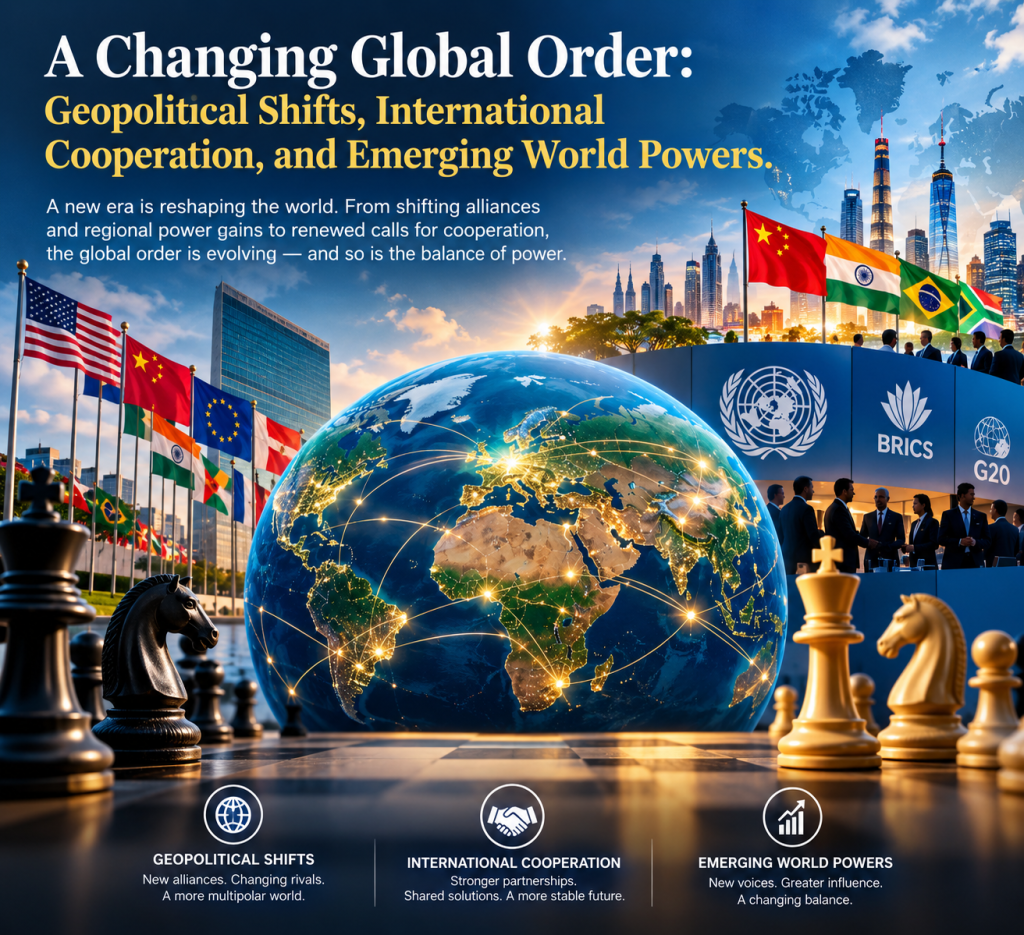
The world is entering a new era of global transformation. As emerging economies gain influence, traditional alliances evolve, and international relationships shift, the balance of global power is changing.
The Rise of a New Global Order
For decades, the United States and its Western allies played a dominant role in global politics and economics. Today, countries such as China, India, Brazil, and Russia are reshaping the international landscape.
The world is gradually moving toward a multipolar system, where several powerful nations influence global decisions rather than one country or bloc dominating international affairs.
This shift is creating new opportunities for economic growth, diplomacy, and international partnerships while introducing fresh geopolitical challenges.
Emerging Powers and the Growing Influence of BRICS
Emerging economies are becoming increasingly important in global affairs.
China continues to expand its technological and economic influence, while India is strengthening its position through economic development and international diplomacy.
Meanwhile, BRICS has expanded beyond its original members, creating a broader platform for cooperation among emerging economies.
Countries across Africa, Asia, and Latin America are also seeking greater influence in international institutions and global economic discussions.
These developments reflect a growing demand for a more inclusive international system.
Africa’s Role in the Changing World
Africa is becoming an increasingly important player in global economic and geopolitical affairs.
With its natural resources, young population, expanding markets, and strategic location, the continent offers significant opportunities for international investment and cooperation.
South Africa, Egypt, and other African countries have important roles in regional diplomacy and economic development.
However, challenges such as political instability, unemployment, infrastructure shortages, and economic inequality must be addressed for the continent to realize its full potential.
Technology, Trade, and Global Competition
Technology is becoming a major source of international influence.
Artificial intelligence, cybersecurity, semiconductor manufacturing, and renewable energy are transforming economies and national security strategies.
At the same time, countries are reconsidering international trade relationships and reducing dependence on vulnerable supply chains.
Although economic competition can encourage innovation, excessive trade restrictions and geopolitical tensions can disrupt global markets.
Balancing national interests with international cooperation remains a major challenge.
International Cooperation in a Divided World
Despite growing competition, global challenges require countries to work together.
Climate change, international security, economic instability, and technological risks cannot be solved by individual nations alone.
Organizations such as the United Nations, the G20, and the World Trade Organization provide platforms for international dialogue and cooperation.
However, many developing countries are calling for reforms that would give them greater representation in global decision-making.
Building trust and strengthening international partnerships will be essential for addressing shared challenges.
The Future of Global Power
The changing global order presents both opportunities and uncertainties.
Emerging powers are gaining influence, regional alliances are evolving, and international institutions are facing increasing pressure to adapt.
The future will depend on how countries manage geopolitical competition, promote economic development, and address global challenges.
A more balanced world is possible, but it will require responsible leadership, effective diplomacy, and meaningful international cooperation.
Conclusion
The global balance of power is changing, creating a new chapter in international relations.
From China’s economic rise and India’s growing influence to Africa’s expanding opportunities, the world is becoming more interconnected and politically diverse.
The greatest challenge of this new era is not simply determining who holds the most power, but finding ways for nations to coexist, cooperate, and build a more stable and prosperous future.





Leave a Reply