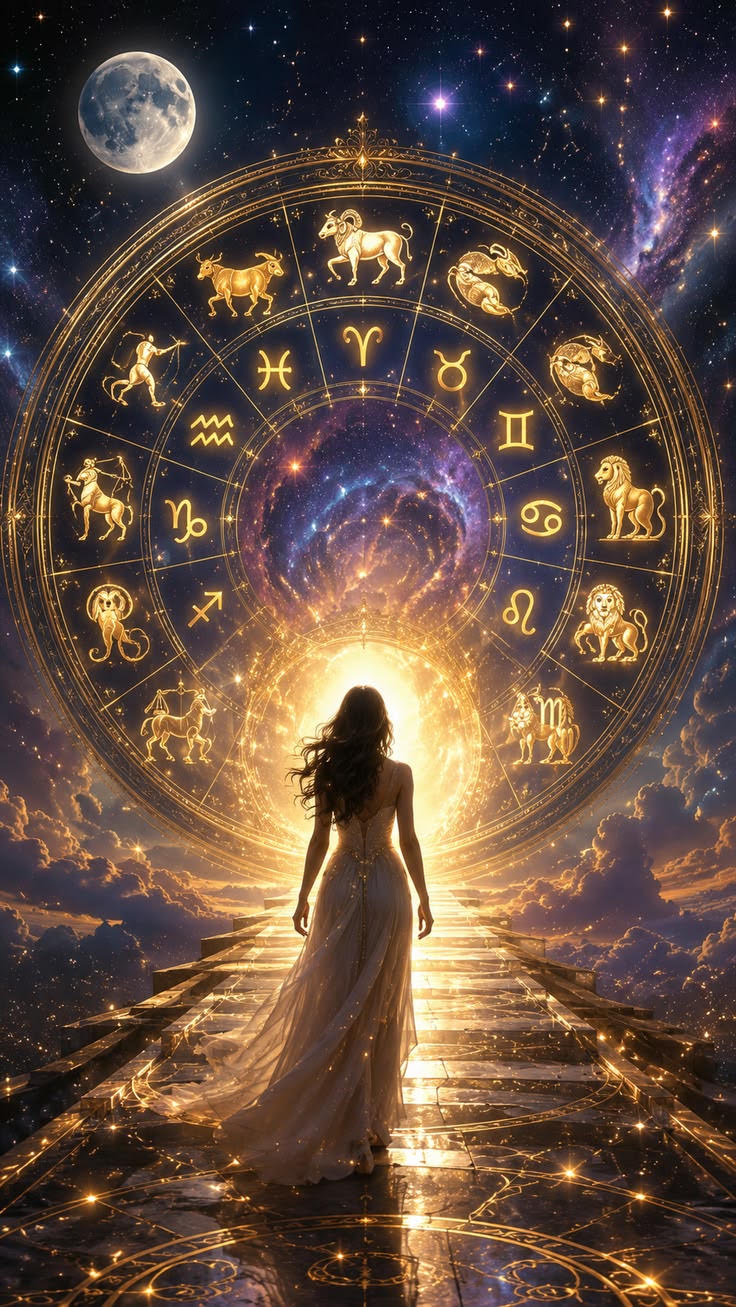
Exploring the enduring appeal of astrology, the psychology behind our horoscopes, and humanity’s search for meaning in the universe.
For thousands of years, humanity has looked to the stars for answers. Ancient civilizations studied the movements of celestial bodies, searching for patterns they believed could reveal something about human nature, relationships, and the future. Today, despite remarkable advances in science and technology, astrology continues to attract millions of people around the world.
From daily horoscopes and zodiac compatibility charts to astrology apps and social media discussions, this ancient practice remains deeply woven into modern culture. But what explains its lasting popularity in an age when scientific knowledge is more accessible than ever?
Perhaps the answer lies not in the stars themselves, but in the human desire to understand ourselves and the world around us.
From Ancient Civilizations to the Digital Age
Astrology has a long and fascinating history. Ancient Babylonian astronomer-priests observed celestial movements and connected them to events on Earth, often interpreting them as signs relevant to rulers and kingdoms.
The Greeks later developed and refined many astrological concepts, helping establish the zodiac system that remains familiar today. Over centuries, astrology spread across cultures, evolving alongside different philosophical and spiritual traditions.
Although its role in society has changed, its central appeal remains remarkably consistent: the belief that the heavens may offer insight into human experiences.
In the digital age, astrology has found a new audience. People can now receive personalized birth charts, compatibility readings, and daily predictions within seconds. What once required specialist knowledge is now available through a smartphone.
Yet accessibility does not necessarily mean accuracy.
What Does Science Say About Astrology?
Despite its historical significance and cultural influence, astrology has not established itself as a scientifically reliable method of predicting personality, relationships, or future events.
Scientific investigations have not produced consistent, convincing evidence that the positions of celestial bodies at the time of birth determine an individual’s character or life experiences.
This distinction matters. Astrology may provide entertainment, encourage reflection, or offer a meaningful cultural tradition, but these benefits do not demonstrate that its predictions are objectively accurate.
Understanding this difference allows us to appreciate astrology without treating it as a substitute for evidence-based knowledge.
But if astrology cannot reliably predict our future, why do so many people feel that it understands them?
The Psychology Behind Astrology’s Appeal
One reason astrology remains popular is that it offers people a language for exploring their identities.
When someone reads that their zodiac sign represents independence, loyalty, creativity, or emotional sensitivity, they may begin comparing those descriptions with their own experiences. This process can encourage reflection on personal strengths, weaknesses, and relationships.
The descriptions themselves may be broad, but the thoughts they inspire can sometimes lead to meaningful self-examination.
Psychology also offers another explanation: the Barnum effect. This describes our tendency to interpret general personality descriptions as uniquely accurate representations of ourselves.
For example, a statement such as “You enjoy being around people, but sometimes you need time alone” applies to many individuals. Nevertheless, someone reading it may feel that it captures their personality remarkably well.
This does not mean everyone who enjoys astrology is gullible. Rather, it demonstrates how human perception, personal experience, and the desire for self-understanding can influence what we believe.
Finding Comfort in Uncertain Times
Life rarely follows a predictable path. Career decisions, financial pressures, relationship difficulties, and personal disappointments can leave people searching for reassurance.
Astrology offers a framework through which some individuals interpret these uncertainties. A horoscope suggesting patience, personal growth, or a fresh beginning may provide encouragement during a difficult period.
For some, the appeal lies less in the prediction itself and more in the opportunity to pause, consider their circumstances, and imagine new possibilities.
However, comfort should not be confused with certainty. A horoscope cannot guarantee that a difficult period will end on a particular date or that a specific decision will produce a desired outcome.
Astrology can be a source of personal reflection, but important decisions are best guided by practical considerations, reliable information, and careful judgment.
Zodiac Signs and Human Connection
Astrology also creates opportunities for social interaction.
Asking someone about their zodiac sign can be an easy way to begin a conversation. Discussions about personality traits, romantic compatibility, and astrological differences can bring people together, even when they do not take the subject seriously.
For some communities, astrology has become a shared cultural language. People use zodiac signs to describe themselves, joke about their friends, discuss relationships, and explore differences in personality.
These interactions can be enjoyable because they offer a simple starting point for conversations that might otherwise feel uncomfortable or too personal.
Nevertheless, zodiac signs should never become rigid labels. People are complex individuals whose values, experiences, and behavior cannot be fully explained by their birth dates.
Astrology as a Mirror, Not a Map
Perhaps the most balanced way to approach astrology is to treat it as a mirror rather than a map.
A mirror invites reflection. It encourages us to examine our thoughts, recognize our habits, and consider how we relate to others.
A map, by contrast, suggests a defined route toward a destination. When astrology is used to determine major life decisions, it can encourage people to surrender their judgment to predictions that have not been scientifically established.
There is a meaningful difference between reading a horoscope for enjoyment and allowing it to dictate whom to love, whether to change careers, or how to manage money.
Health decisions should rely on qualified medical professionals, financial choices on sound financial reasoning, and relationship decisions on communication, mutual respect, and actual behavior.
Astrology can remain an interesting part of someone’s life without becoming the authority over it.
Why We Still Look to the Stars
The continued popularity of astrology reveals something important about human nature. We are curious about ourselves, fascinated by the unknown, and constantly searching for patterns that help us understand our experiences.
Science provides powerful tools for explaining the physical universe, but questions about identity, purpose, relationships, and belonging remain deeply personal.
Astrology offers some people a symbolic way to explore those questions. Its appeal comes not necessarily from the accuracy of its predictions, but from the stories, conversations, and reflections it inspires.
Ultimately, the stars may capture our attention, but they do not need to determine our future.
The real value lies in our willingness to question, reflect, learn, and make thoughtful decisions about the lives we want to build.
Whether you read your horoscope every morning or remain skeptical of the entire practice, one thing is certain: humanity’s fascination with the night sky reflects a timeless desire to find meaning in a vast and mysterious universe.
Perhaps we continue looking to the stars not because they hold all our answers, but because asking questions is part of what makes us human.
—
Final Thought
The stars may inspire our imagination, but self-awareness, experience, and informed choices are what help us navigate life.



Leave a Reply