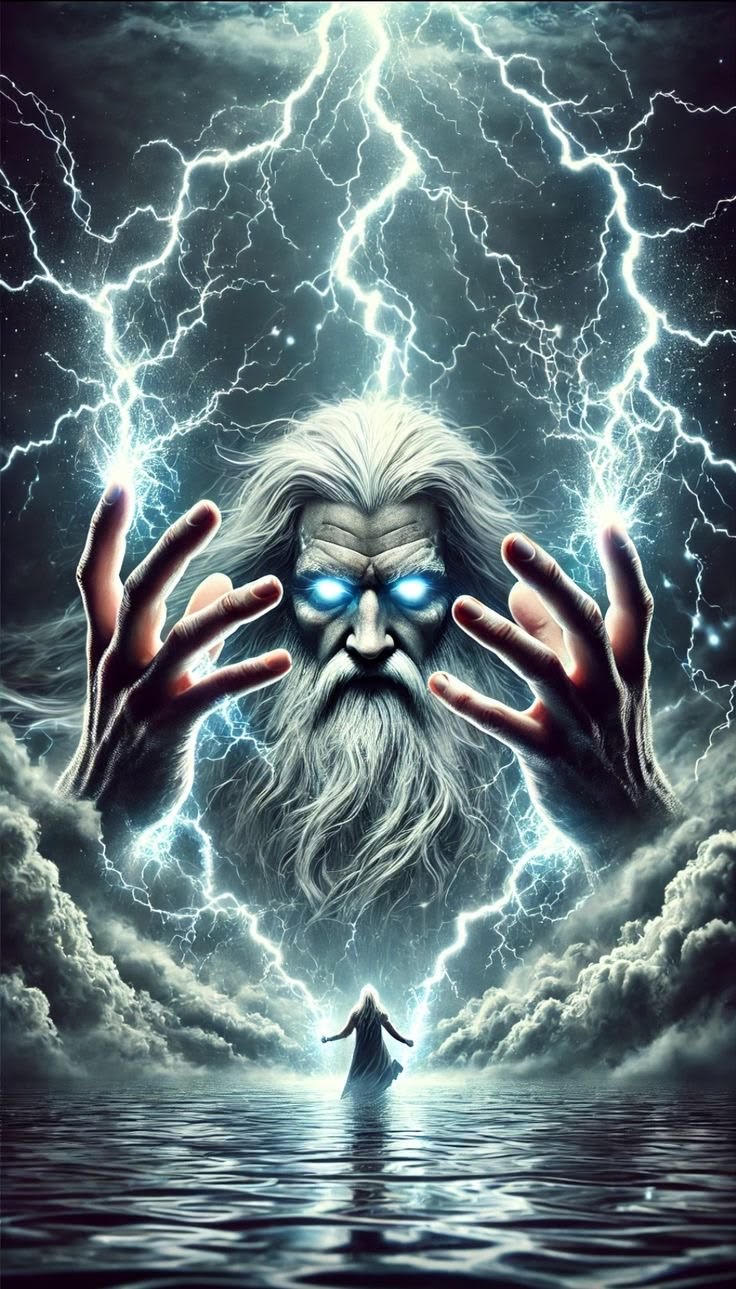
Long before empirical inquiry offered explanations for natural phenomena, human societies constructed elaborate mythological systems to account for the workings of the cosmos, the nature of mortality, and the moral order governing human conduct. These narratives functioned not merely as entertainment but as cultural frameworks through which ancient peoples articulated their understanding of chaos, virtue, and the limits of human agency. An examination of several major mythological traditions reveals both their distinct cultural preoccupations and their shared narrative logic.
The Greek Pantheon: Anthropomorphism and Moral Complexity
Greek mythology remains foundational to Western literary and philosophical tradition, in part because of its distinctive anthropomorphic conception of divinity. The Olympian gods, presided over by Zeus, are characterized less by abstract omnipotence than by recognizably human failings: Hera’s jealousy, Aries’ propensity for violence, Aphrodite’s vanity. Scholars have long argued that this moral ambiguity served a didactic function, allowing audiences to examine human vice and virtue through a divine lens rendered safely distant by myth.
The heroic figures of Greek myth follow a comparable pattern. Heracles’ labors, Theseus’s confrontation with the Minotaur, and Perseus’s decapitation of Medusa each dramatize a structure later identified by scholars such as Joseph Campbell as the “hero’s journey”: departure, trial, and transformative return. This narrative architecture recurs with striking consistency across unrelated mythological traditions, suggesting it addresses a near-universal feature of human psychological development.
Norse Mythology: Fatalism and Heroic Resolve
Norse cosmology is distinguished by its pervasive fatalism. Odin’s sacrifice of an eye for wisdom, and his ordeal of self-hanging upon Yggdrasil to obtain knowledge of the runes, exemplify a worldview in which knowledge is acquired only through suffering. Thor’s continual struggle against giants and serpents likewise reflects a preoccupation with duty over glory.
Central to this tradition is the prophecy of Ragnarök, the foretold destruction of the gods themselves. Unlike many mythological systems in which divine figures are assumed immortal and inviolable, the Norse gods are depicted as fully aware of their eventual defeat. This theological peculiarity has led scholars to interpret Norse myth as an ethical meditation on courage in the face of certain, rather than merely possible, defeat.
Egyptian Mythology: Cosmic Order and the Problem of Death
Egyptian religious thought centered on the concept of ma’at, a principle of cosmic and moral order maintained by deities such as Ra and Osiris against the forces of chaos, personified by the serpent Apophis. The daily journey of Ra’s solar barque, understood as a recurring triumph over darkness, reflects a cyclical cosmology in which order requires perpetual renewal rather than a single decisive victory.
The myth of Osiris—murdered by his brother Set, dismembered, and subsequently restored by his wife Isis—further illustrates this preoccupation with continuity beyond death. Osiris’s transformation into ruler of the afterlife positioned him as a paradigm for Egyptian conceptions of mortality, in which death constituted a transitional state rather than a terminus.
Monstrous Figures as Cultural Metaphor
Mythological monsters across traditions frequently function as embodiments of specific cultural anxieties. The Greek Hydra, which produced two heads for every one severed, has been read as a cautionary figure regarding the futility of certain forms of conflict. The Norse wolf Fenrir, fated to kill Odin, personifies an inescapable destiny. The Japanese serpent Yamata no Orochi similarly encodes cultural anxieties surrounding both natural danger and the protection of resources. Such figures suggest that monstrosity in myth is rarely arbitrary; rather, it typically externalizes a specific fear the culture in question found otherwise difficult to articulate.
Conclusion
The persistence of these mythological traditions in contemporary culture suggests that their significance extends beyond their original theological function. Ancient myths continue to be retold not because their cosmological claims retain literal credibility, but because they encode enduring reflections on pride, fear, mortality, and the possibility of meaningful action in the face of insurmountable odds. In this sense, mythology remains less a record of belief in supernatural agents than a sustained inquiry into the human condition.



Leave a Reply