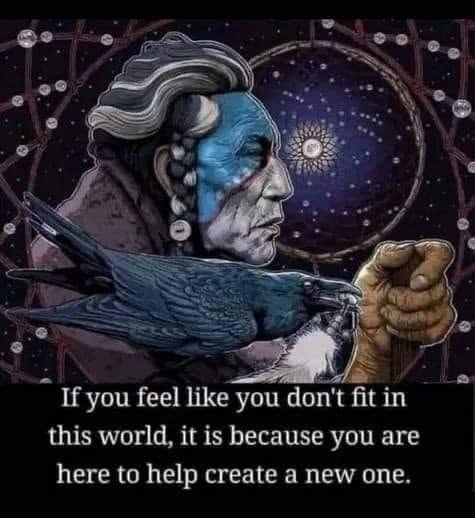
Long before modern medicine, national parks, environmental movements, and written histories transformed the relationship between people and the natural world, Indigenous peoples across North America developed complex traditions of healing, ceremony, storytelling, and stewardship.
Across the continent, Native nations created distinct cultures shaped by their environments, histories, languages, and spiritual traditions. From the forests of the Northeast to the Great Plains, the deserts of the Southwest, the Pacific Northwest, and the Arctic, communities developed their own ways of understanding health, responsibility, animals, plants, ancestors, and the forces of nature.
At the center of many of these traditions were respected spiritual and healing specialists—sometimes described in English as medicine people, medicine men, medicine women, healers, or spiritual leaders. But these terms can be misleading when applied universally. Different Indigenous nations have their own words, roles, teachings, and ceremonial practices.
What connects many traditions is not a single religious system, but a profound idea: human beings exist within nature rather than outside it.
The Medicine Person: More Than a Healer
The popular image of a “medicine man” often comes from books, movies, and simplified accounts of Native American cultures. The reality is considerably more diverse.
In some Indigenous societies, particular individuals held specialized knowledge concerning healing, ceremony, plants, dreams, prayers, or relationships with the spiritual world. Their responsibilities could extend far beyond treating physical illness.
Healing might involve a combination of physical remedies, prayer, community support, ceremony, storytelling, fasting, or other culturally specific practices.
Knowledge was often connected to responsibility. A healer was not simply someone who knew which plant could be used for a particular illness. Their knowledge existed within a larger cultural framework involving relationships among people, community, land, animals, and the spiritual world.
And importantly, not every Native nation had an equivalent to the role commonly called a medicine man.
Nature as Teacher
For many Indigenous cultures, the natural world has never been merely a collection of resources.
The land can be understood as a source of knowledge, responsibility, identity, and connection.
Mountains, rivers, forests, grasslands, deserts, oceans, and animals have different meanings within different Indigenous traditions. Certain places may hold particular cultural or spiritual significance, while particular plants and animals may appear in stories, ceremonies, teachings, or clan systems.
This relationship encouraged close observation.
Generations of accumulated knowledge helped communities understand seasonal changes, animal behavior, weather patterns, edible plants, medicinal plants, water sources, and the characteristics of their local environments.
Nature was not simply something to study.
It was something to listen to.
Sacred Plants and Traditional Knowledge
Plants have played important roles in many Indigenous cultures, but their uses and meanings vary enormously from nation to nation.
Some plants have been used as food. Others have been used in traditional healing, cleansing practices, ceremonies, dyes, construction, or everyday life.
The knowledge surrounding these plants could be remarkably detailed: when to harvest them, which part of the plant to use, how to prepare them, and how to treat the land while collecting them.
Some plants also became associated with ceremonial practices. However, many sacred teachings are not public knowledge, and outsiders should not assume that every Indigenous practice is available for observation or reproduction.
That distinction matters.
Indigenous knowledge is not simply an ancient collection of “natural remedies” waiting to be discovered. It belongs to living communities with their own laws, traditions, responsibilities, and cultural boundaries.
Animals as Teachers, Relatives, and Symbols
Animals occupy powerful places in the traditions and stories of many Indigenous nations.
Eagles, wolves, bears, turtles, ravens, buffalo, salmon, deer, coyotes, and countless other animals appear in different cultural traditions across North America. Their meanings, however, are not universal.
A wolf may represent something entirely different in one tradition than in another. An eagle may have particular significance within one community while another nation has a completely different relationship with the bird.
Animals can appear as characters in creation stories, teachers in traditional narratives, clan or family connections, symbols of particular qualities, or beings deserving respect and protection.
These stories often communicate more than entertainment.
They can teach younger generations about courage, humility, responsibility, cooperation, consequences, and the proper relationship between humans and the world around them.
Storytelling: A Library Without Shelves
For thousands of years, Indigenous peoples transmitted knowledge through oral traditions.
Stories could preserve history, explain relationships, teach moral principles, describe landscapes, remember ancestors, and pass knowledge from one generation to the next.
A story told beside a fire could therefore carry information that might otherwise require an entire library.
But Indigenous storytelling is not one universal tradition. Some stories are public, while others are connected to particular families, societies, seasons, ceremonies, or communities.
This is one reason it is important to approach Indigenous traditions with respect rather than treating them as a collection of exotic legends.
These are living cultures, not relics of a vanished past.
Healing the Whole Community
One of the most interesting aspects of many traditional approaches to healing is the recognition that health can involve more than the physical body.
Relationships, community, emotional wellbeing, spiritual life, environment, and individual behavior can all be connected.
This does not mean traditional healing should be presented as a replacement for modern medicine. Modern healthcare has an essential role, and Indigenous communities today use contemporary medicine alongside traditional practices in many different ways.
Instead, traditional approaches can provide insight into a broader concept of wellbeing: a healthy person exists within healthy relationships—with family, community, culture, and the world around them.
Ceremony and Sacred Space
Ceremonies differ widely among Indigenous nations.
Some traditions include songs, prayers, dances, fasting, feasting, purification practices, storytelling, or gatherings of the community. Some ceremonies mark important stages of life, seasonal changes, relationships, remembrance, or spiritual responsibilities.
Sacred spaces can also vary dramatically.
A mountain, spring, river, forest, cave, coastline, or particular landscape may hold significance because of its history and relationship to a community.
For an outsider, a landscape might appear ordinary.
For an Indigenous community, it may carry generations of memory.
The Buffalo and the Plains
Few animals have become as strongly associated with Indigenous North America as the American bison.
For numerous Plains nations, bison historically provided food, clothing, tools, shelter materials, and other necessities. The animal was therefore deeply connected to survival and culture.
The relationship was not simply economic.
Bison could occupy important places within ceremonies, stories, teachings, and cultural identity.
The near-destruction of enormous bison populations during the nineteenth century therefore had consequences that extended far beyond wildlife. It disrupted Indigenous economies, cultures, and ways of life.
The story of the bison demonstrates an important lesson: when a species disappears from a landscape, the cultural consequences can be just as profound as the ecological ones.
A Different Understanding of Stewardship
Modern environmentalism often speaks about conservation, sustainability, biodiversity, and ecosystem protection.
Many Indigenous traditions contain longstanding principles concerning responsibility toward land and other living beings, although these principles differ considerably among nations.
Stewardship can involve understanding that people have obligations to future generations and that taking from the environment carries responsibilities.
This perspective offers a powerful question for the modern world:
What if our relationship with nature were measured not only by what we can take from it, but by what we are willing to protect for those who come after us?
That question has become increasingly relevant in an era of climate change, habitat loss, declining biodiversity, and environmental degradation.
Traditions That Survived
The history of Native North America also contains enormous hardship.
Indigenous peoples faced colonization, forced removal, warfare, disease, restrictions on cultural practices, boarding-school systems, and attempts to suppress Indigenous languages and traditions.
Yet Indigenous cultures did not simply disappear.
Across North America, Native nations continue to maintain languages, ceremonies, artistic traditions, ecological knowledge, political institutions, and cultural identities. Younger generations are participating in language revitalization, cultural education, land stewardship, and the preservation of traditional knowledge.
The survival of these traditions is therefore not merely a story about the past.
It is a story about the present.
What the Forest Still Has to Teach Us
The greatest lesson found within many Indigenous perspectives may be surprisingly simple.
We are connected.
The food we eat comes from the earth. The water we drink moves through rivers and underground systems. The air we breathe connects every living organism. Animals shape ecosystems. Plants support entire food webs. Human communities depend upon landscapes that can easily be damaged but take generations to recover.
Indigenous traditions across North America are extraordinarily diverse, and there is no single Native American philosophy that can represent them all.
Yet many communities have preserved teachings that encourage people to recognize their responsibilities to one another, to future generations, and to the natural world.
Perhaps that is why these traditions continue to attract attention today.
Not because they belong to some mysterious world lost in the past, but because they contain living knowledge about relationships, responsibility, resilience, and respect.
The forests, rivers, mountains, animals, and skies of North America have witnessed countless generations come and go.
And the oldest lesson may still be waiting for us:
Nature is not merely where we live. We are part of it



Leave a Reply