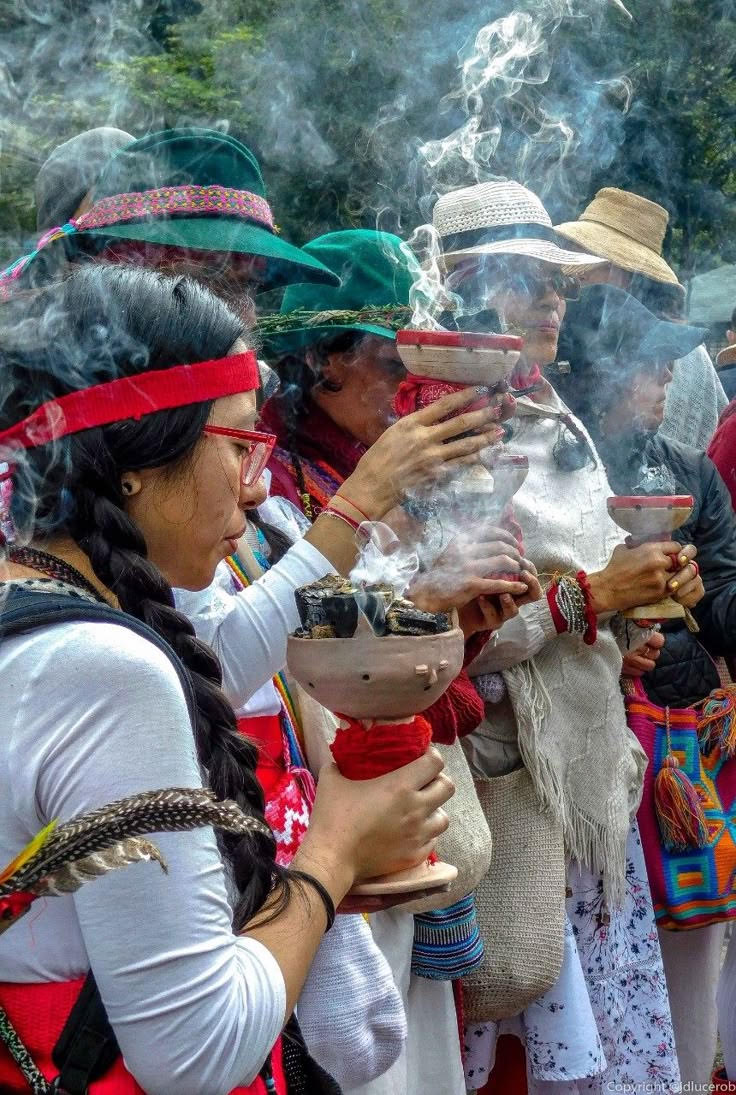
On opposite sides of the globe, two of humanity’s oldest civilizations developed elaborate systems of healing that intertwine the physical, spiritual, and natural worlds. In the Amazon basin and Andean highlands of South America, and across the vast subcontinent of India, traditional healers have preserved knowledge passed down through generations — knowledge that continues to shape health, spirituality, and daily life for hundreds of millions of people today.
South America: Healers of the Rainforest and Highlands
South America’s indigenous healing traditions are as varied as the continent’s geography, ranging from the dense rainforests of the Amazon to the high-altitude communities of the Andes.
The Curandero and the Shaman
In much of South America, the term curandero (or curandera for women) refers to a traditional healer who treats both physical illness and spiritual affliction, often blending Catholic imagery absorbed during Spanish colonization with pre-Columbian beliefs. In Amazonian communities, healers are more often referred to by terms specific to their language groups, though “shaman” — while an imported term, as in Africa — has become commonly used in both academic and popular literature to describe those who mediate between the human and spirit worlds.
Central to many Amazonian healing traditions is the use of medicinal and psychoactive plants, most notably ayahuasca, a brew made from the Banisteriopsis caapi vine combined with other plant ingredients. Traditionally administered in structured ceremonies led by an experienced healer, ayahuasca is used to diagnose illness, resolve psychological or spiritual distress, and facilitate what practitioners describe as direct communication with plant spirits or ancestors. In recent decades, this practice has drawn significant international attention, including from Western medical researchers studying its potential applications for conditions such as depression and addiction — though this growing interest has also raised concerns about cultural appropriation and the commercialization of sacred ceremonies for tourism.
Andean Traditions
In the Andean highlands, healing is closely tied to the concept of Pachamama, or Mother Earth, and to maintaining balance, or ayni, between the individual, the community, and the natural world. Andean healers, sometimes called paqos, conduct ceremonies involving coca leaves — a plant considered sacred long before its association with modern narcotics — to diagnose ailments, offer guidance, and give thanks to the mountains and earth spirits believed to govern health and fortune.
India: A Subcontinent of Layered Healing Systems
India’s healing traditions are shaped by thousands of years of philosophical and religious development, resulting in systems that are often more formally documented than many oral traditions elsewhere, while still preserving strong elements of ritual and spiritual practice.
Ayurveda: Medicine as a Way of Life
Ayurveda, often translated as “the science of life,” is among the world’s oldest continuously practiced medical systems, with roots extending back thousands of years. Rather than treating illness as an isolated malfunction, Ayurveda views health as a state of balance among three fundamental energies, or doshas — vata, pitta, and kapha — which are believed to govern physical and mental function. Treatment typically combines diet, herbal remedies, lifestyle adjustment, and practices such as yoga and meditation, with the goal of restoring balance rather than simply eliminating symptoms.
Ayurvedic practitioners, known as vaidyas, undergo formal training, and the system is officially recognized by the Indian government alongside conventional biomedicine, with dedicated colleges, hospitals, and regulatory bodies overseeing its practice.
Faith Healers and Folk Traditions
Alongside formalized systems like Ayurveda, India maintains a wide range of folk healing practices, often carried out by individuals believed to possess spiritual gifts — sometimes called ojhas, baba, or by other regionally specific titles. These healers frequently operate at the intersection of Hindu, Muslim, and syncretic folk belief, addressing conditions understood to have spiritual rather than purely physical origins, such as possession, the evil eye, or curses.
Temples themselves often function as sites of healing. Pilgrims travel great distances to specific shrines believed to hold curative power for particular ailments, reflecting a belief system in which geography, deity, and health are deeply interconnected.
Shared Threads Across Two Continents
Despite vast cultural and geographic distance, South American and Indian healing traditions share notable commonalities. Both systems resist a strict separation between physical and spiritual health, both rely heavily on plant-based medicine developed through generations of accumulated knowledge, and both continue to operate alongside — rather than in place of — modern biomedical systems.
Both regions also face similar contemporary tensions: growing global interest in traditional practices has brought welcome recognition and, in some cases, valuable scientific validation, but it has also raised legitimate concerns about the commodification of sacred knowledge, the loss of cultural context when practices are exported for foreign consumption, and the need to protect practitioners and communities from exploitation.
Preserving Knowledge for the Future
As biomedical science continues to explore the pharmacological potential of traditional remedies, and as researchers work to document oral traditions before they are lost to modernization, there is a growing recognition that these systems represent more than folklore. They are the product of careful, generational observation — evidence that healing, in its fullest sense, has never been solely the province of any one culture or century.
Understanding these traditions on their own terms, rather than filtering them entirely through a Western scientific lens, offers a richer picture of how humanity has sought to understand illness, wellness, and the forces that connect body, mind, and spirit.


Leave a Reply