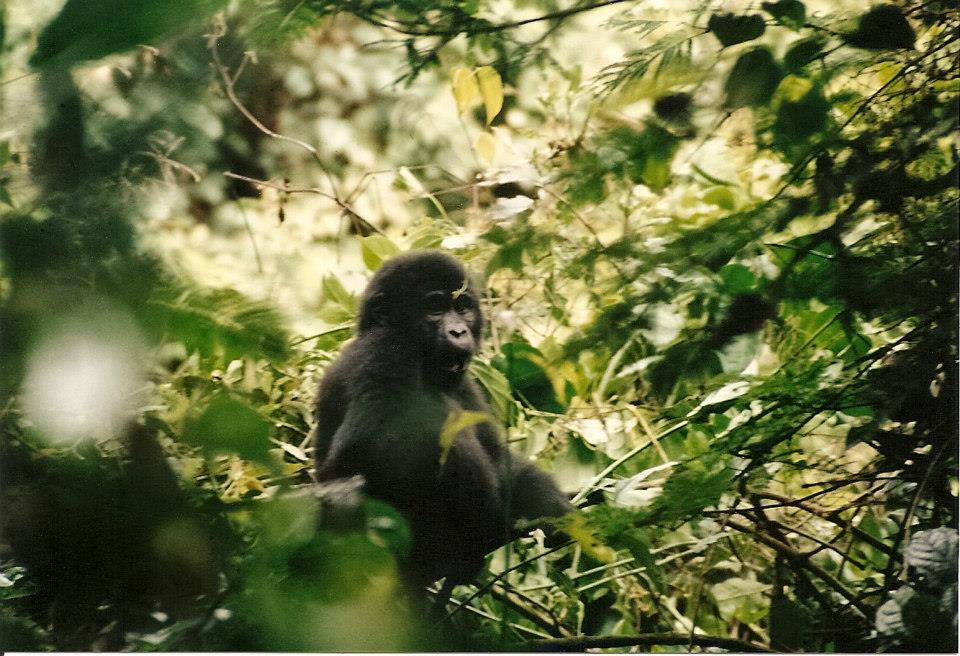
Deep in the misty forests of Central Africa, where ancient trees rise through clouds and volcanic mountains dominate the horizon, one of the world’s most remarkable conservation stories continues to unfold.
The mountain gorilla was once frighteningly close to extinction. Today, its population has grown to more than a thousand individuals. That recovery demonstrates what determined conservation can achieve—but it also shows how quickly progress can be threatened when the protection of wildlife and forests is neglected.
From the Brink of Extinction
During the 1980s, the mountain gorilla population had fallen to roughly 240 animals. Their remaining habitat was under pressure from human settlement, agriculture, poaching and political instability.
Today, mountain gorillas exist in only two regions.
The first is the Virunga Massif, a mountainous forest landscape shared by Rwanda, Uganda and the Democratic Republic of the Congo. The second is the Bwindi-Sarambwe ecosystem, located along the Uganda-DRC border.
Recent population surveys have provided encouraging news. The Bwindi-Sarambwe population was estimated at 459 gorillas, while the Virunga population was estimated at 604. Together, these surveys produced an estimated population of about 1,063 mountain gorillas.
That increase was significant enough for the International Union for Conservation of Nature (IUCN) to change the mountain gorilla’s classification from Critically Endangered to Endangered.
It was a remarkable milestone—but not a reason to stop.
How Did the Population Recover?
There was no single miracle solution.
Instead, the recovery came from years of persistent work involving governments, conservation organizations, scientists, veterinarians, rangers and communities living around the forests.
Stronger protection became one of the most important tools. Rangers patrol the forests, remove snares and monitor gorilla groups. Their work can be dangerous, and some rangers have lost their lives while protecting wildlife.
Veterinary care has also played an important role. Specially trained wildlife veterinarians can monitor gorillas and, when necessary, provide medical treatment in the forest.
Then there is the human side of conservation.
Local communities live alongside these protected forests. Conservation becomes much more sustainable when those communities can benefit from protecting wildlife rather than being forced to choose between their livelihoods and the survival of a species.
When Tourism Helps Conservation
Mountain gorilla tourism has become another important part of the conservation system.
Visitors pay substantial fees for the opportunity to see gorillas in their natural habitat under carefully controlled conditions. When tourism revenue is properly managed, it can help finance national parks, conservation programs, ranger operations and community initiatives.
The idea is simple: a living gorilla and a protected forest can have lasting economic value, while a dead gorilla or destroyed habitat cannot.
But tourism must remain responsible and carefully regulated. Too many visitors, careless behavior or poor health practices could create new risks for the very animals tourism is intended to help.
A Fragile Recovery
Despite the progress, mountain gorillas remain endangered.
Their population is still small and concentrated in only two areas. That makes the species particularly vulnerable to sudden disasters.
Disease is one major concern.
Gorillas are closely related to humans and can be vulnerable to some human pathogens, including respiratory infections. This is why visitors are required to follow strict rules concerning distance, illness and interaction with gorillas.
Other threats remain as well. Poaching, accidental snaring, habitat pressure, climate change and political instability can all undermine conservation efforts.
A population of just over a thousand animals cannot afford many setbacks.
One serious disease outbreak, prolonged conflict or major loss of habitat could have consequences that take decades to reverse.
The Forest Protects the Gorilla—and the Gorilla Protects the Forest
There is another important lesson hidden within the mountain gorilla story.
Saving the gorilla also means protecting the ecosystem in which it lives.
The forests of the Virunga and Bwindi regions are home to countless other plants and animals. They also provide important resources and environmental benefits for human communities.
Protecting these forests therefore goes beyond saving one species. It is about maintaining an entire ecological system.
And that means the people living around the forests must remain part of the conservation story.
When local communities have opportunities to benefit from tourism, employment, education and sustainable development, conservation can become a shared responsibility rather than something imposed from outside.
A Success Story That Isn’t Finished
The mountain gorilla’s recovery is one of the clearest examples of what long-term conservation can accomplish.
A species that once numbered only a few hundred animals now numbers more than a thousand.
But the real lesson is not that the mountain gorilla has been saved.
The lesson is that conservation works when people continue doing the work.
Rangers must keep patrolling. Scientists must keep monitoring populations. Veterinarians must remain ready to respond to disease. Governments must cooperate across borders. Communities must have meaningful reasons to protect their natural heritage. And tourism must be managed responsibly.
The mountain gorilla still needs all of them.
Protecting the Future
Standing in the mist of a Central African forest and watching a mountain gorilla move quietly through the vegetation is more than a remarkable wildlife experience. It is a reminder of how much can be lost—and how much can still be recovered.
The journey from approximately 240 mountain gorillas in the 1980s to more than 1,000 today did not happen by accident.
It happened because people refused to give up.
The challenge now is to make sure that progress continues.
The mountain gorilla’s story is therefore not simply a story about extinction and recovery. It is a story about persistence, cooperation and hope.






 The Blind Man Society
Leave a comment