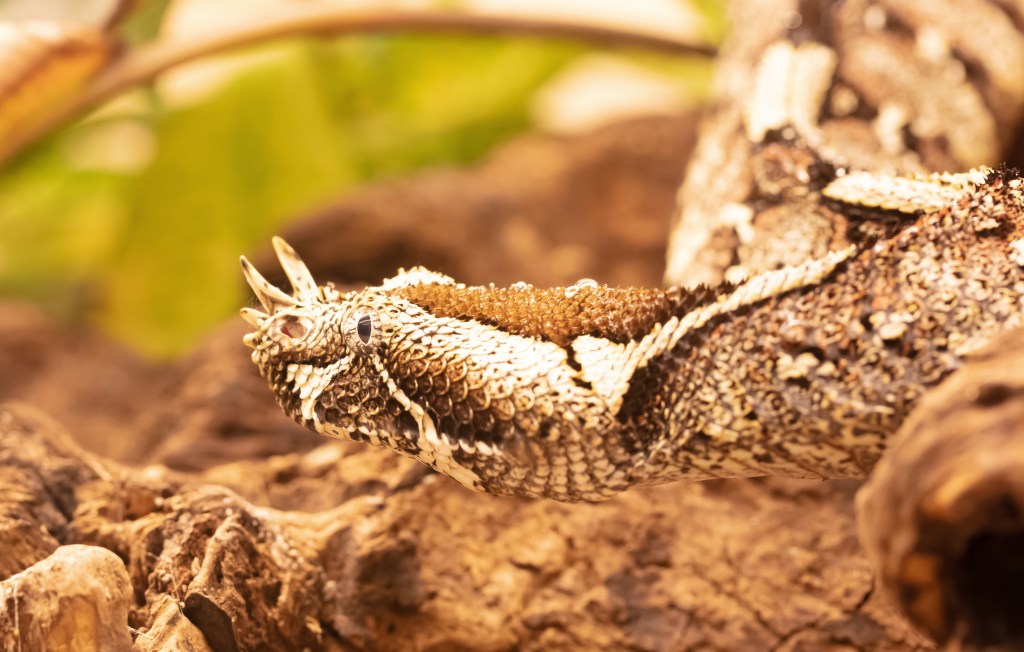
The nature train rolls on! I was sitting here thinking today about poisonous snakes. Since I have visited Africa, I wanted to cover four of my personal favorites from there. These four vipers are among the most beautiful touch-me-nots in the world…
The Rhinoceros Viper:

Rhino vipers, also known as River Jacks have a potent neurotoxin and are unique in the snake world in that they bite and elevate and hold their prey in their mouths until it succumbs to the venom. They can climb trees, have prehensile tails and are also swimmers. They also possess heat pits on their snouts that pick up heat signatures from prey and these allow them to know when food is coming.
The Gaboon Viper:
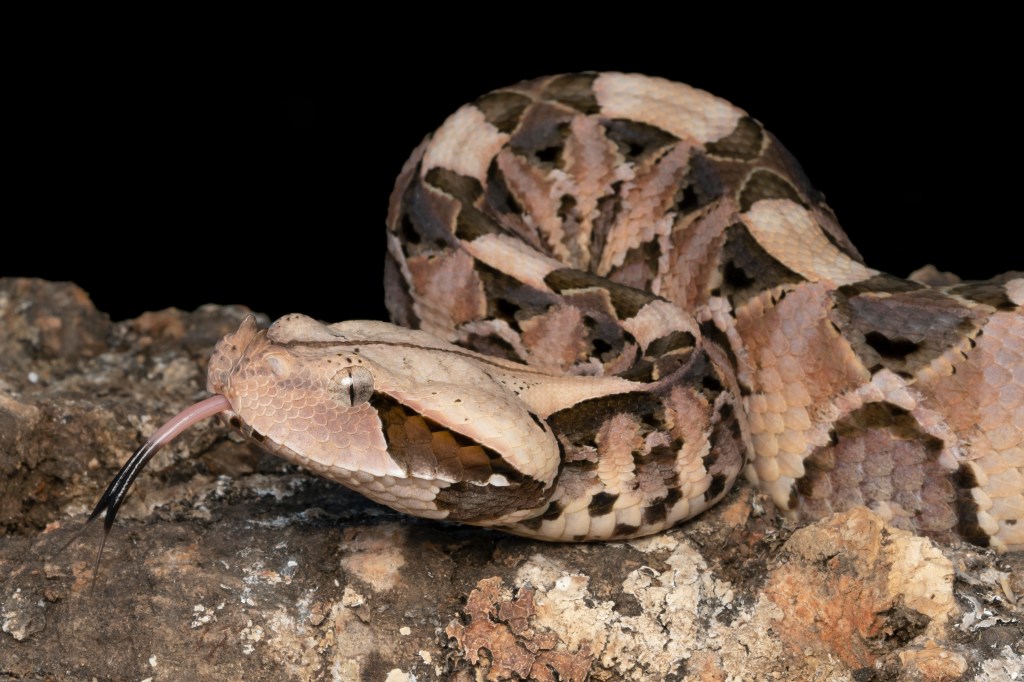
Gaboon Vipers have the longest fangs in the venemous snake world. These snakes can bite through Gore-Tex boots, and are also ambush predators in both East and West Africa. They lay, perfectly concealed and camoflaged on the forest floor, waiting for animals to come by. Sometimes, they can go a year without eating, but since they don’t move very often their slow metabolisms allow for this much time to go by before they eat. A meal, will last them months.
The Bush Viper:

Bush Vipers are arboreal predators, that have hemotoxin venom. They are among the most attractive of the poisonous snakes in the world, but they also possess some of the nastiest dispositions! These guys come in a rainbow of colors, but the gold and red remain my favorites. Professional hunters of the trees, these guys use their tongues to scent and “smell” prey.
And, finally the Desert Horned Viper:
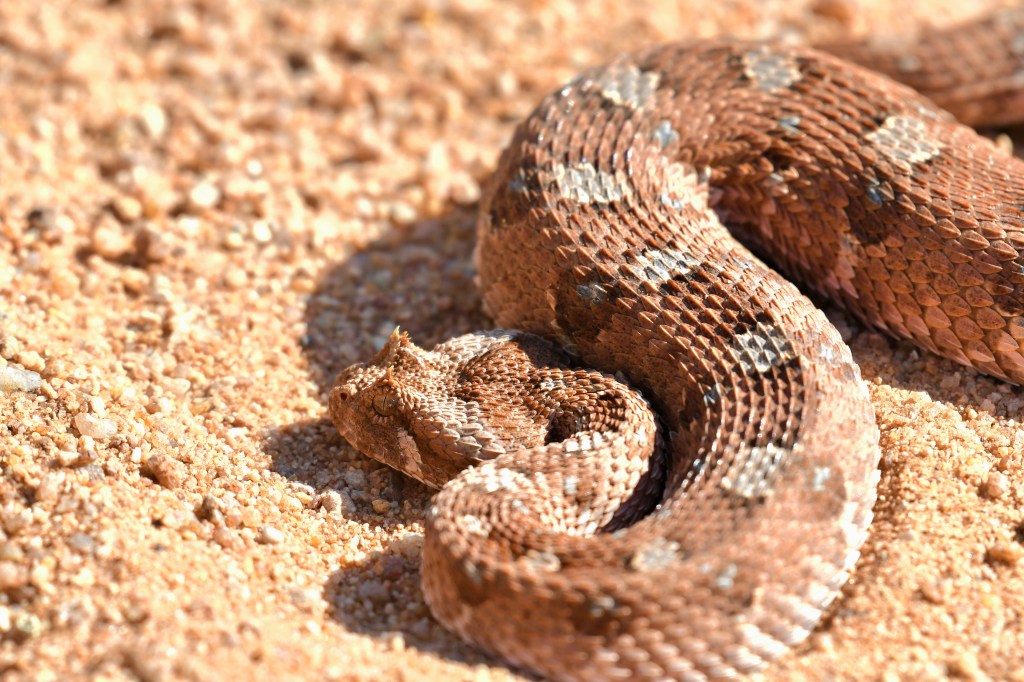
Desert Horned Vipers are also ambush predators, and sit concealed in the sand with only their faces and horns showing. They prey on rodents and lizards at night, shielded from the sun and heat during the day. These are such cool little guys, and this individual was photographed at Etosha – Namibia.
I’ve been lucky enough to see these guys at a snake park in South Africa, and they are at most zoos here in the USA. You can get these Captive Bred and Born (CBB) in the pet trade, but it is VERY good idea to have experience working with HOT Herps before you ever do get one. Most states here require a license to keep them, and it is strongly advisable to have vials of anti-venom (which are astronomically expensive and hard to obtain) stocked with the local hospitals before obtaining one – because the bites can be fatal!
Hope everyone is having a great day out there, and thank you so much for reading this today! As always, please feel free to leave comments in the box below.






 The Blind Man Society
Leave a comment