I thought it was a good idea to do a Nature post today. And, I’m thinking about one of my favorite animals for it – the Old World chameleons from mainland Africa and the island nation of Madagascar.
There’s plenty of camoflage in the world these days from what I can tell. The ocean from the surface hides a universe of life below. Concrete jungles hide all kinds of wildlife – both people and animals. Books, never to be judged by their covers, hold untold knowledge and adventure. But, it all comes from the Chameleon in terms of what people reference and refer to with blending and disguise.
The first chameleon of my three favorites is the Orange Eye Parson’s Chameleon.

The second is the Four Horn Chameleon (Quadricornis).

The third, is the Panther Chameleon.
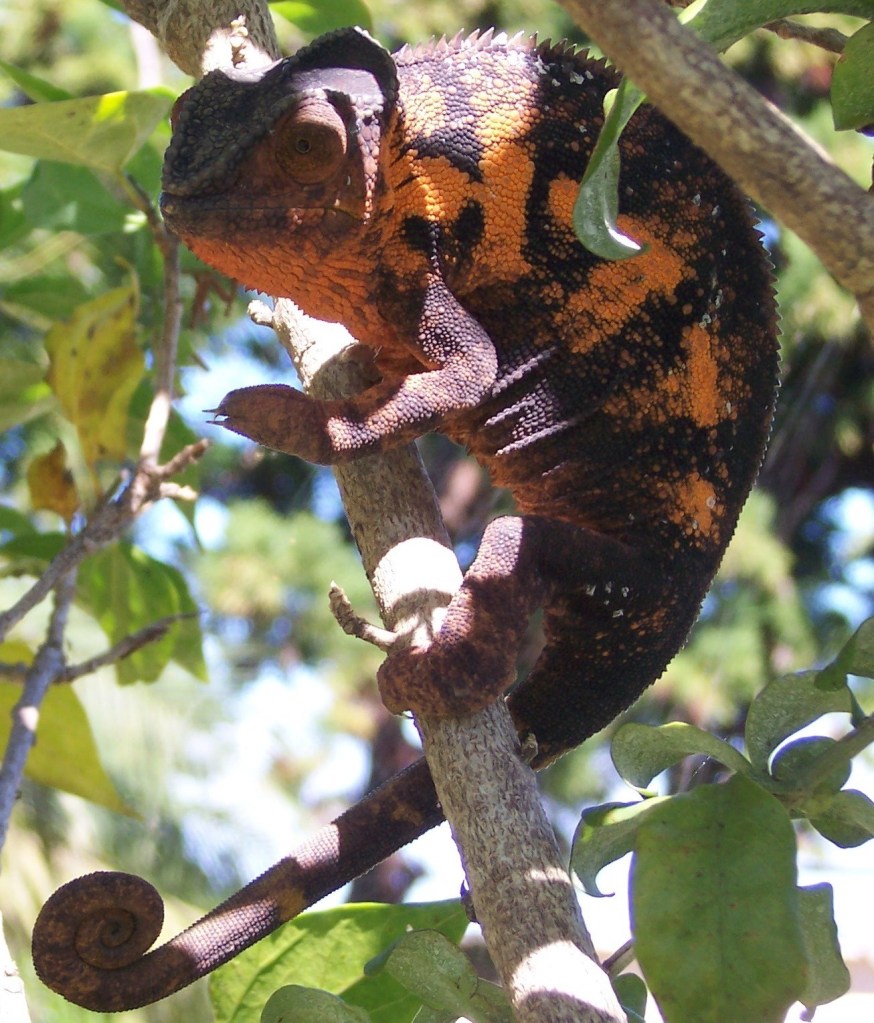
These pictures are courtesy of Wikipedia.org.
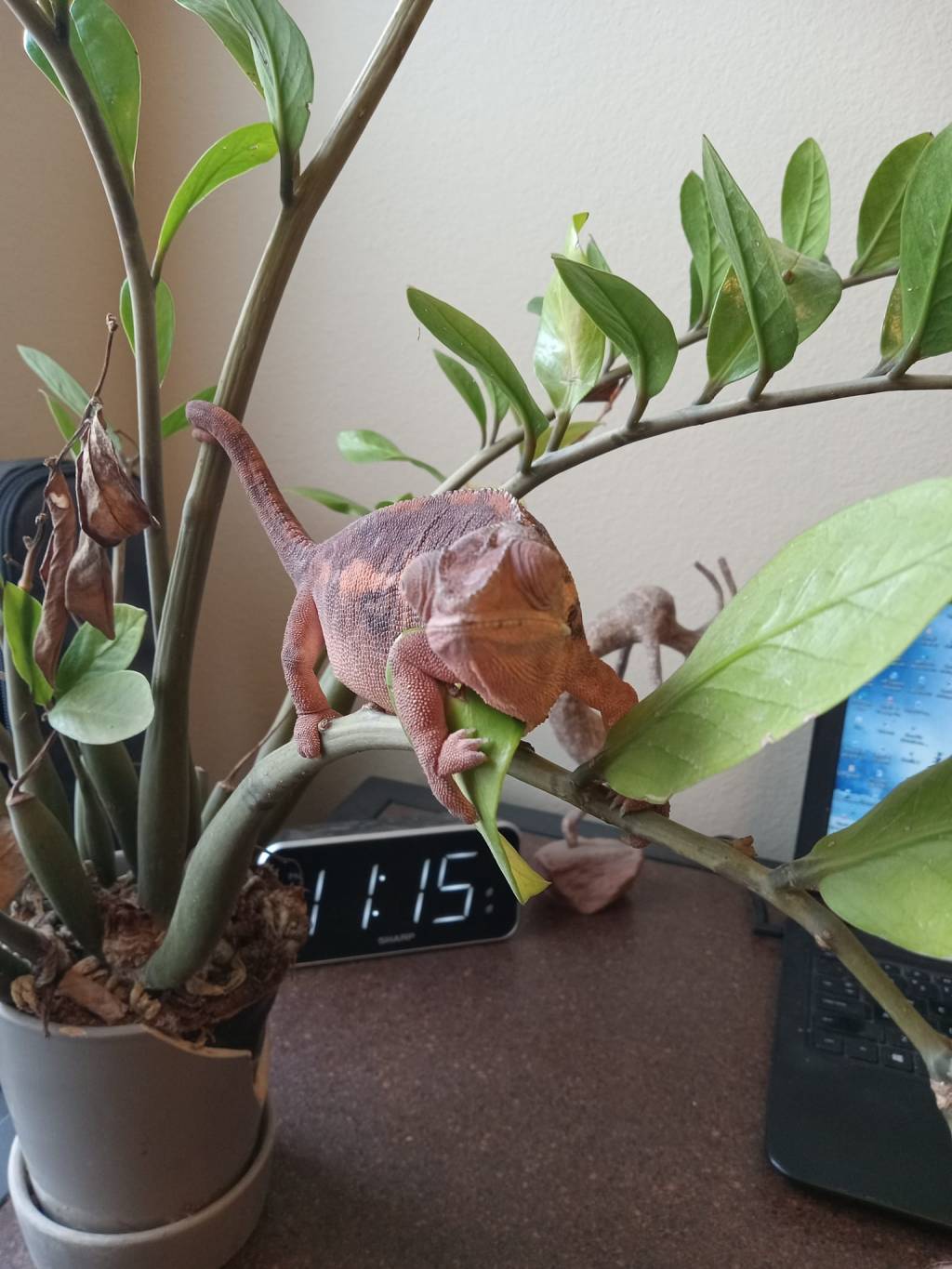
The leading blog image is of Lady, my old panther chameleon. She was one of my favorite pets of all time, and I used to let her out of her cage every day to roam my apartment. She would climb up the power cord of the lamp, jump on to the palm plant I bought for her, and make her way to the blinds to sit in the sunlight all afternoon and change colors. She moved so slowly that I used to joke she was counting her steps and was my workout partner. And, my favorite part was holding super worms up to her, and having her shoot her foot long tongue out to pick them out of my hand. We had, it down to a system.
Like all animals that are not captive bred and born (CBB) chameleons belong in the wild – where they do best. For those who are born into knowing a pet cage, or outside enclosure, they are REALLY fun animals to have. However, their care requirements must be met daily or they go down fast. These include misting with a spray bottle or misting system for good humidity, proper temperatures, gut loading crickets with vegetables and vitamins and calcium, meal worms, super worms the same, the list goes on… Its about 200-300 to get a great enclosure for one, and as they are predators, they must be kept solitary – even their reflection in the mirror will set them off.
As a final note, lay bins must be included for the females. Whether the eggs are fertilized or not, the females will produce eggs (most species do this, a few, like the Jacksons Chameleon produce live young) and a bucket or flowerpot must be kept in the bottom of the enclosure with soil, sand, or some other suitable substrate, where the females will dig to bury their eggs for hatching.
Thank you for taking the time to read this blog! I hope everyone has a phenomenal day out there today, wherever you may be, and for those in the USA – stay warm!! I was experimenting with supporting images in the story today, and now that I think I’ve got it, there will be a lot more coming. Learning every day! Please feel free to leave your comments in the box below.




 The Blind Man Society
Leave a comment